
Signs of Roof Damage You Can’t Ignore
Signs of Roof Damage You Can’t Ignore
Most homeowners do not think much about their roof until a leak appears. The problem is that visible leaks usually show up after damage has already had time to spread. That is why knowing the early signs of roof damage to look for can help you act sooner, avoid bigger repair bills, and protect the rest of your home.
A damaged roof does not always announce itself with a dramatic problem. Sometimes the warning signs are subtle. A few missing shingles, discoloration near the roofline, damp spots inside the house, or water not draining correctly can all point to issues that need attention. The sooner those signs are identified, the easier it usually is to prevent more serious structural or moisture-related damage.
Get Expert Clarity in 15 Minutes
Stop guessing about your home’s integrity. Schedule a direct 15-minute diagnostic call with Justin to cut through the “sales talk,” identify your project’s specific needs, and coordinate your no-obligation on-site inspection.
Spring Projects Start Now
Reserve BisonWorks before the end of March and Save $250 off that Spring Reservation
If you have been wondering what to watch for, here are the most important roof damage warning signs homeowners should never ignore.
1. Missing, Cracked, or Curling Shingles
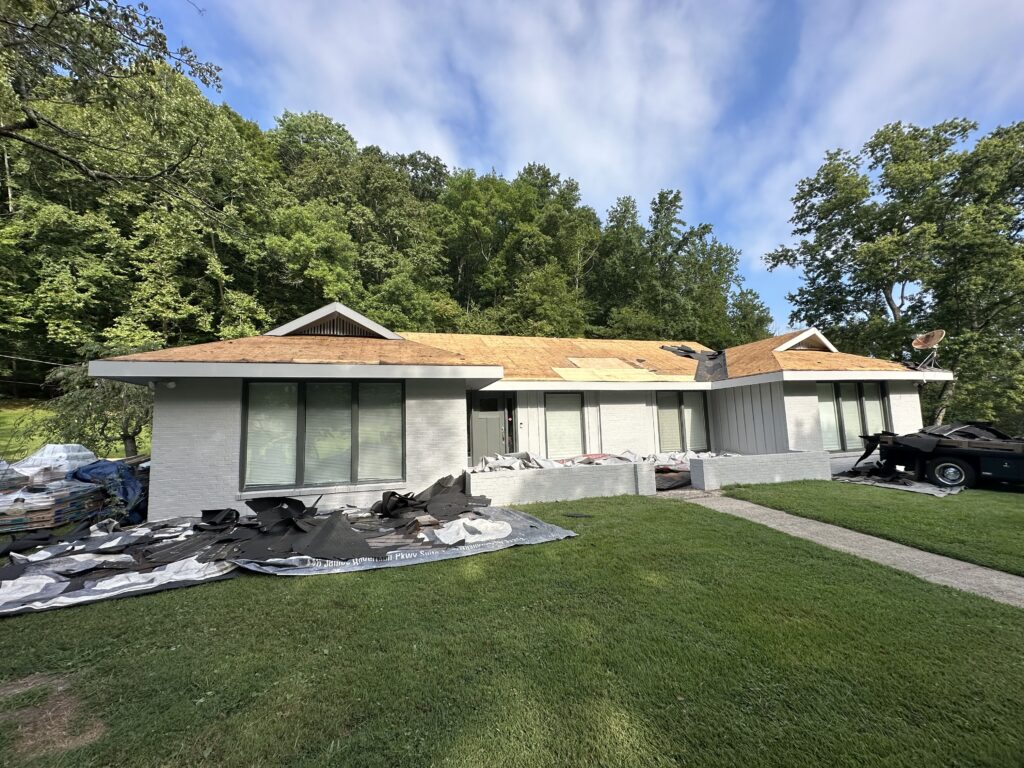
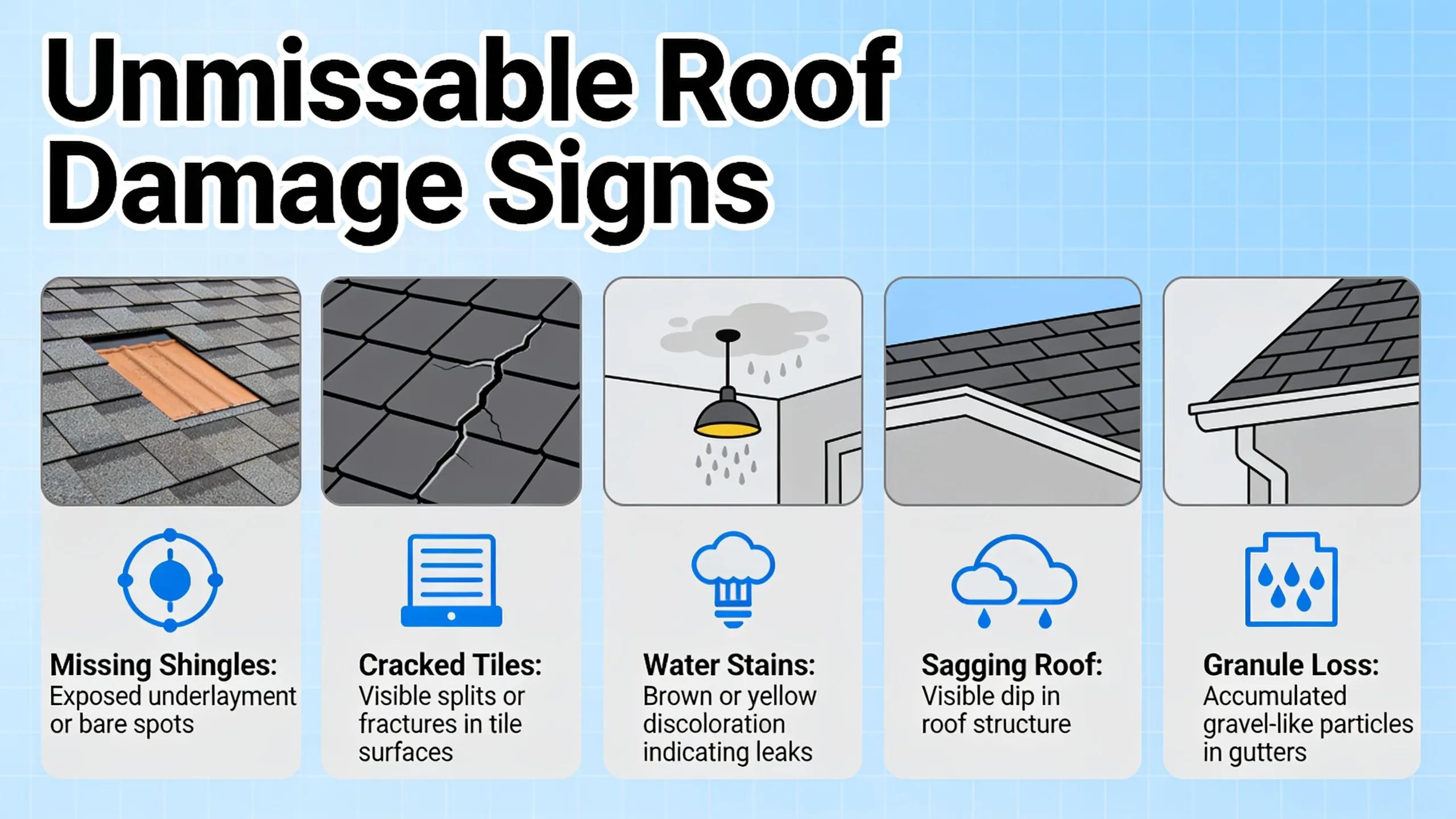
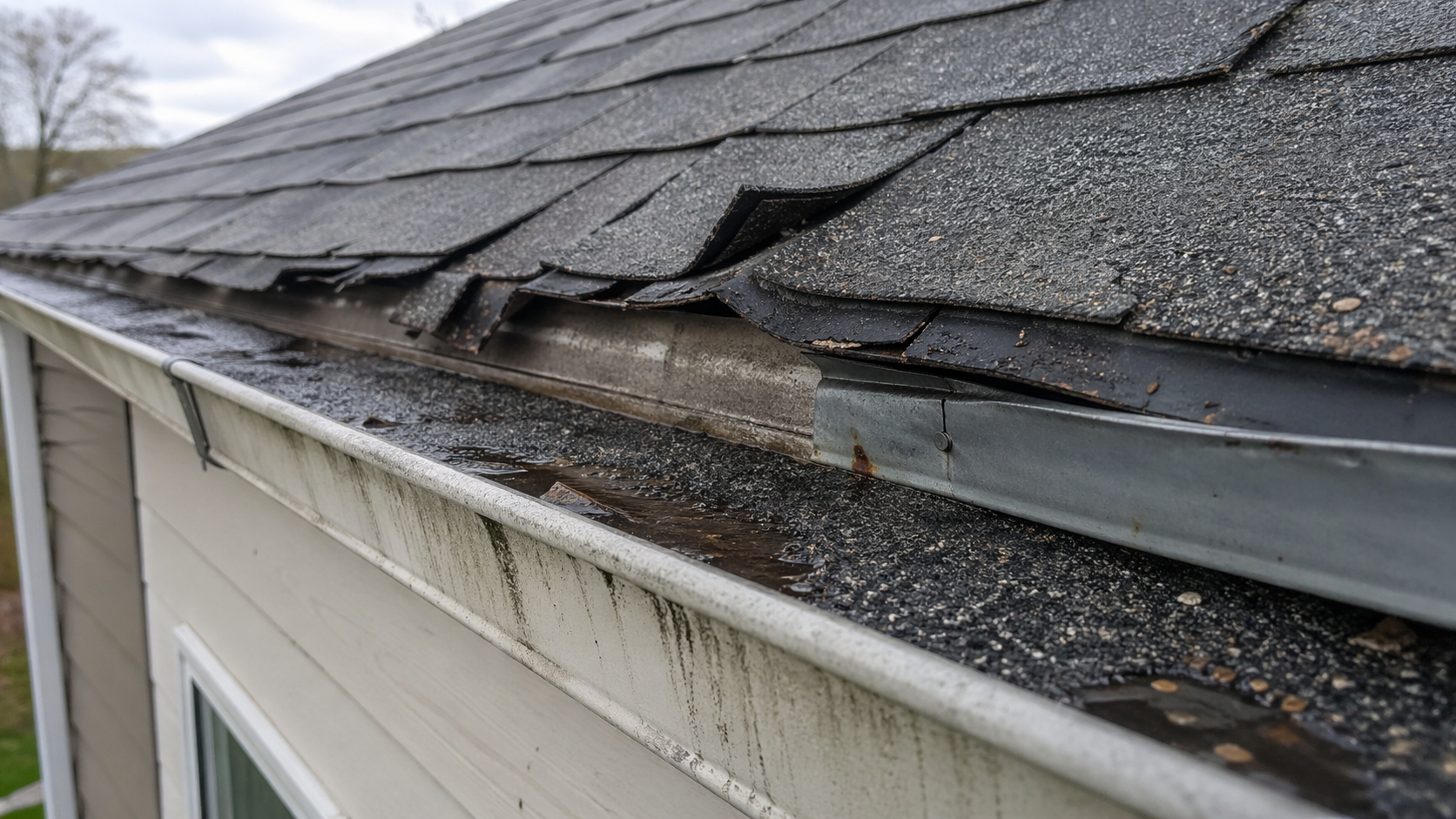
Shingles are one of the first places roof damage tends to show. If shingles are missing, lifting, cracking, or curling at the edges, your roof may already be vulnerable to moisture intrusion and weather exposure.
Even one damaged section can create an entry point for water. Over time, that can lead to underlayment damage, wood rot, and leaks inside the home. Shingle damage may be caused by age, wind, hail, or long-term sun exposure, but whatever the cause, it should not be ignored.
2. Storm or Weather-Related Roof Damage
Strong winds, hail, heavy rain, and falling debris can all damage a roof. Sometimes storm damage is obvious, such as torn shingles or visible impact marks. Other times, it is less noticeable and shows up later through leaks, loose materials, or drainage issues.
After severe weather, inspect the roof from the ground if possible and look for anything unusual along the ridges, edges, and visible slopes. If the area has recently experienced storms, even a roof that looks mostly fine may still have hidden trouble spots.
3. Water Stains on Ceilings or Walls
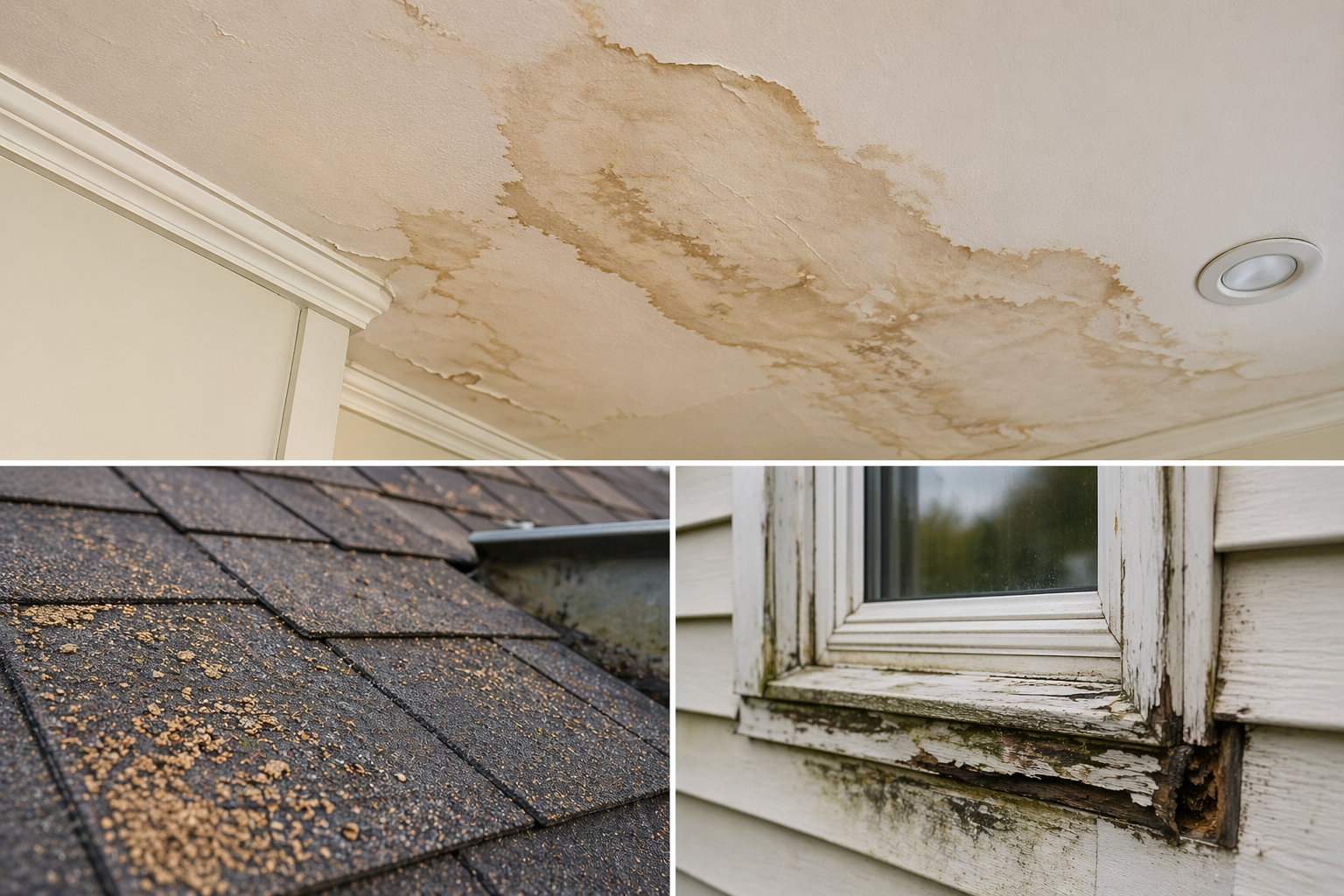
One of the clearest interior signs of roof damage is water staining inside the home. Brown spots on ceilings, bubbling paint, damp drywall, or unexplained discoloration can all suggest that moisture is entering somewhere above.
At that point, the issue may no longer be limited to the roof surface. Water can travel through insulation, decking, and wall cavities before it becomes visible indoors. That is why interior signs should always be taken seriously, even if the roof itself looks normal from outside.
4. Sagging or Uneven Roof Lines
A roof should look straight and structurally sound. If you notice any dipping, sagging, or uneven rooflines, that can indicate a more serious problem underneath the surface.
Sagging can sometimes point to trapped moisture, weakened decking, or long-term structural stress. This is one of the warning signs that should be inspected by a professional as soon as possible because it may indicate that the damage is progressing beyond the outer roofing materials.
5. Granules in Drainage Areas or Clogged Gutters
Asphalt shingles often shed granules as they age, but excessive granule loss can be a sign of roofing wear. If you notice shingle granules collecting around downspouts or repeated buildup in your gutters, it may mean the roof is deteriorating faster than expected.
This is one reason roof problems and drainage issues often go hand in hand. Bison Works’ gutter service page specifically highlights proper drainage as a way to protect the home and extend the life of roofing and siding.
6. Damage Showing Up on Siding or Exterior Walls
Roof problems do not always stay at the top of the house. Poor drainage, leaks near the roofline, or repeated water runoff can begin affecting sections of your siding, especially around corners, trim, and exterior wall joints.
If you notice discoloration, moisture streaks, staining, or unusual wear on siding near the roof edge, the problem may not be the siding alone. In some cases, the roof or drainage system is contributing to the issue. Bison Works gutters its core exterior services alongside roofing and gutters.
7. Mold, Algae, or Streaking on Exterior Surfaces
Dark streaks, mildew, algae growth, or long-term staining on the exterior can sometimes be connected to roof drainage or moisture issues. While surface buildup may be cleaned with pressure washing, it is important to determine whether the staining is only cosmetic or whether it is being caused by ongoing runoff problems from the roof.
Bison Works offers pressure washing for siding, decks, patios, and other surfaces, which makes it a natural supporting service when roof-related staining affects curb appeal.
8. Peeling Paint or Trim Deterioration Near the Roofline
When moisture repeatedly reaches fascia boards, trim, soffits, or nearby exterior surfaces, you may begin seeing peeling, bubbling, or fading paint. That kind of wear may look like a simple cosmetic issue, but it can sometimes point back to a roofing or drainage problem.
Once the source of moisture is resolved, affected areas may also need painting to restore appearance and help protect the exterior finish.
Bison Works’ painting service emphasizes long-lasting finishes that enhance and protect interior and exterior surfaces.
When Should Roof Damage Be Inspected by a Professional?
Some signs of roof damage are easy to spot but hard to diagnose. A homeowner may notice a stain, a missing shingle, or clogged drainage, but still not know how far the problem has spread.
A professional inspection makes sense when:
- damage appears after a storm
- shingles are missing or visibly worn
- interior stains show up
- the roofline looks uneven
- moisture seems to be affecting siding or trim
- drainage issues keep returning
The earlier a roof problem is inspected, the better the chances of keeping repair costs smaller and more manageable.
What Should Homeowners Do After Noticing Signs of Roof Damage?
If you notice possible roof damage, the best first step is to avoid waiting. Small problems rarely improve on their own. Instead, they usually continue to worsen as the roof is exposed to more weather.
A smart response is to:
- document visible signs with photos
- avoid climbing onto the roof yourself
- check interior spaces for signs of moisture
- note whether gutters or siding show related issues
- schedule a professional inspection
Acting early can make the difference between a minor repair and a much larger restoration project.
Final Thoughts
Knowing the early signs of roof damage to look for can help you catch issues before they become more disruptive and expensive. Missing shingles, storm wear, interior stains, clogged gutters, siding damage, and moisture-related exterior problems are all warning signs worth taking seriously.
The key is not just noticing the symptoms but understanding how roofing problems can affect other parts of the home as well. When damage is identified early, homeowners have a better chance of protecting both their roof and the exterior systems connected to it.
FAQs
1. What are the most common signs of roof damage?
Common signs include missing shingles, cracked or curling shingles, water stains inside the home, sagging roof areas, clogged gutters, and visible storm damage.
2. Can missing shingles mean bigger roof problems?
Yes. Missing shingles can expose underlying materials to moisture and weather, which may lead to leaks and structural damage over time.
3. How can you tell if storm damage affected your roof?
Look for lifted shingles, fallen debris, visible roofline damage, flashing issues, and new leaks or stains after severe weather.
4. Can clogged gutters be a sign of roof damage?
Yes. Granules, debris, and poor drainage in gutters can sometimes indicate roofing wear or a roof drainage issue.
5. Should siding stains or peeling paint make me suspect roof damage?
They can. Water runoff and moisture from roof or gutter problems may affect siding, trim, and painted exterior surfaces.